“water vapor” search results (400)

Six steps for tasting coffee
After proper roasting and standard extraction, the coffee looks like a drifting vapor and a dark brown liquid. But after tasting it carefully, it can be found that it has completely different characteristics. These characteristics will be affected by different producing areas, differences in planting height, types of soil, minor changes in climate, the number of Rain Water and other factors. Just like good wine.
2014-05-21 Coffee tasting
Six steps for tasting coffee
After proper roasting and standard extraction, the coffee looks like a drifting vapor and a dark brown liquid. But after tasting it carefully, it can be found that it has completely different characteristics. These characteristics will be affected by different producing areas, differences in planting height, types of soil, minor changes in climate, the number of Rain Water and other factors. Just like good wine.
2016-09-29 Coffee six tasting steps passing appropriate roasting standard extraction coffee
Introduction to the video of foaming skills and production methods of Italian coffee machine
Italian coffee machine foam skills 1, do not put the steam pipe into the milk, because there may be some condensed water vapor in the steam pipe, so before preparing to foam, you need to put it for a while to drain the excess water from the pipe. 2. Beginners can insert the thermometer into the container, then insert the steam pipe obliquely into the milk, and then turn on the steam switch. 3. Slowly turn the steam nozzle
2016-10-19 Italian coffee machine milking skills video production method introduction
General knowledge of coffee roaster after burner system
Post-burner system, also known as direct-fired thermal oxidizer system. Direct-fired thermal oxidizer or post-burner is the simplest kind of thermal oxidizer, which can greatly reduce VOC emissions by instantly cremating soot or carbide ions into clean water vapor at a high temperature of about 500C. This kind of thermal oxidizer does not carry any heat recovery equipment and cannot recycle the heat generated in the combustion process. Typical
2015-07-06 Coffee roaster burner system common sense also known as direct combustion
Coffee tasting some knowledge about coffee tasting
After proper roasting and standard extraction, the coffee looks like a drifting vapor and a dark brown liquid. But after tasting it carefully, it can be found that it has completely different characteristics. These characteristics will be affected by different producing areas, differences in planting height, types of soil, minor changes in climate, the number of Rain Water and other factors. Just like good wine.
2014-09-19 Coffee knowledge coffee tasting
Fine Coffee learn six Coffee Taste steps
After proper roasting and standard extraction, the coffee looks like a drifting vapor and a dark brown liquid. But after tasting it carefully, it can be found that it has completely different characteristics. These characteristics will be affected by different producing areas, differences in planting height, types of soil, minor changes in climate, the number of Rain Water and other factors. Just like good wine.
2014-10-30 Coffee knowledge boutique coffee science coffee tasting
The blending method of coffee beans
Espresso, a strong-tasting type of coffee, is brewed with extremely hot but non-boiling hot water under high pressure to grind it into a very fine coffee powder. It was invented and developed in Italy and began in the early 20th century, but until the mid-1940s, it was a drink made separately through vapor pressure. Meanwhile, Espresso is considered to be in coffee.
2016-06-05 Coffee beans blending method Espresso a kind of taste strong coffee
Some knowledge about coffee tasting
After proper roasting and standard extraction, the coffee looks the same-drifting vapor and dark brown liquid.
2014-06-23 Coffee knowledge coffee tasting coffee encyclopedia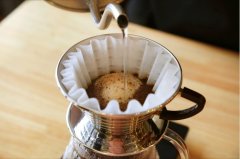
What is the difference between Espresso, latte and cappuccino?
Espresso (Espresso) or espresso is a type of coffee with a strong taste by brewing coffee with extremely hot but non-boiling hot water under high pressure and grinding it into a very fine coffee powder. It was invented and developed in Italy and began in the early 20th century, but until the mid-1940s, it was a drink made solely by vapor pressure. In the hair
2015-11-09 The difference between Espresso latte and cappuccino is
Coffee drink type diagram illustrating the composition of fancy coffee in a cafe
Recently, I found that Lokesh Dhakar has drawn a "Coffee Beverage Type Map", which explains the difference between nine coffee drinks, which is simple and easy to understand. Espresso / Espresso the pressurized vapor passes directly through the coffee powder, and the liquid obtained is called espresso. It belongs to pure coffee and is the base of other coffee drinks. II. American Coffee / Black
2015-03-31 Coffee beverages types illustrations museum fancy ingredients recently discovered Lok
Siphon coffee maker (Syphon)
Siphon coffee pot, also known as Syphon. It was developed by Robert, an engineer of the Scottish Navy. Robert Napier invented it in 1840. Although the siphon coffee pot is called the siphon pot, it has nothing to do with the siphon principle. Instead, it uses water heating to produce water vapor, which causes the principle of hot expansion and cold contraction. It pushes the hot water from the lower seat to the upper pot, and produces negative after the next pot cools.
2014-08-29 Siphon coffee maker coffee encyclopedia
Six tasting steps of coffee tasting and identification
After proper roasting and standard extraction, the coffee looks like a drifting vapor and a dark brown liquid. But after tasting it carefully, it can be found that it has completely different characteristics. These characteristics will be affected by different producing areas, differences in planting height, types of soil, minor changes in climate, the number of Rain Water and other factors. Just like good wine.
2015-06-12 Coffee six tasting steps identification passing appropriate roasting standard extraction
Classification of coffee beans in the proportion of brewed coffee water
Brazilian coffee is medium-fragrant, sour and mellow, has a mild bitter taste and is famous for its smooth taste. Among them, Santos Coffee is more famous. Mainly produced in the state of Sao Paulo, the variety is Arabica Bourbon, so it is also used to be called Bourbon Santos. It has good quality, smooth taste, moderate acidity and strong sweetness, so it is indispensable for mixed coffee.
2016-06-06 Coffee proportioning coffee beans classification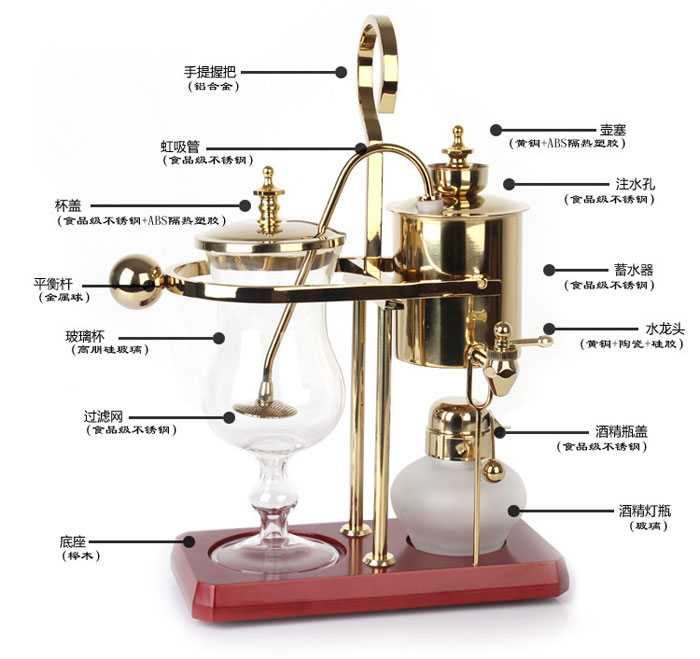
Coffee brewing method: the principle of siphon pot and matters needing attention in operation
Principle: when you heat the pot, the temperature of the water in the pot rises. Many people think that the later principle is that the next kettle boils, and the steam suppresses the hot water on the kettle, and the principle is correct, but as a university has also studied physics, the obsessive-compulsive disorder should be explained here: to be exact, the principle is that the lower kettle produces a lot of steam in the process of rising temperature, and the top of the kettle is free.
2015-12-11 Coffee brewing mode siphon principle operation precautions heating down
Using unsheltered Hawaiian Kona coffee beans to introduce boutique coffee
The climate is very suitable, the sun in the morning gently passes through the air full of water vapor, in the afternoon, the mountains will become more humid and foggy, and the white clouds surging in the air are natural umbrellas for coffee trees, and the evening will become sunny and cool. Suitable natural conditions make the average yield of Kona coffee very high, reaching 2240 kg per hectare, while in Latin American coffee.
2016-06-23 Adoption unsheltered planting Hawaii Kona coffee beans introduction boutique coffee
How to use a siphon coffee maker?
Siphon coffee pot commonly known as glass ball or siphon is a simple and easy-to-use method of coffee brewing, and it is also one of the most popular coffee brewing methods in cafes. It uses water heating to produce water vapor, causing hot expansion and cold contraction, pushing the hot water from the lower sphere to the upper pot, and then sucking back the water from the upper pot after the lower pot cools. Let's take a look at how and how to use it:
2015-11-07 Coffee pot how siphon how to siphon coffee pot usage commonly known as glass
About the siphon coffee maker
Siphon coffee pot, also known as Syphon. It was developed by Robert, an engineer of the Scottish Navy. Robert Napier invented it in 1840. Although the siphon coffee pot is called "siphon pot", it has nothing to do with the siphon principle, but uses water heating to produce water vapor, resulting in the principle of hot expansion and cold contraction, pushing the hot water from the lower seat to the upper pot and waiting for the next pot to cool.
2014-08-11 Coffee knowledge siphon pot coffee machine
Six steps to learn to taste and identify coffee
After proper roasting and standard extraction, the coffee looks like a drifting vapor and a dark brown liquid. But after tasting it carefully, it can be found that it has completely different characteristics. These characteristics will be affected by different producing areas, differences in planting height, types of soil, minor changes in climate, the number of Rain Water and other factors. Just like good wine.
2015-02-13 Coffee common sense six steps learning tasting identification passing appropriate baking
Six steps to learn to taste and identify coffee
After proper roasting and standard extraction, the coffee looks like a drifting vapor and a dark brown liquid. But after tasting it carefully, it can be found that it has completely different characteristics. These characteristics will be affected by different producing areas, differences in planting height, types of soil, minor changes in climate, the number of Rain Water and other factors. Just like good wine.
2015-04-17 Coffee common sense six steps learning tasting identification passing appropriate baking
The basics of coffee some knowledge about coffee tasting
After proper roasting and standard extraction, the coffee looks like a drifting vapor and a dark brown liquid. But after tasting it carefully, it can be found that it has completely different characteristics. These characteristics will be affected by different producing areas, differences in planting height, types of soil, minor changes in climate, the number of Rain Water and other factors. Just like good wine.
2015-04-21 Coffee basics common sense about taste some knowledge process appropriateness baking